⚠️ Chemical Safety Notice & Disclaimer
For Informational Purposes Only. Pool chemical dosing carries inherent risks of severe injury, toxic gas release, and property damage. The calculations and instructions provided here are for general educational purposes and do not replace chemical labels, manufacturer instructions, or professional certified pool operator guidelines.
By utilizing this data, you assume all risk of liability. Always wear appropriate PPE and never mix chemicals. See Terms of Service.
How To Balance Pool Chlorine Levels
1. Maintaining the Free Chlorine Target
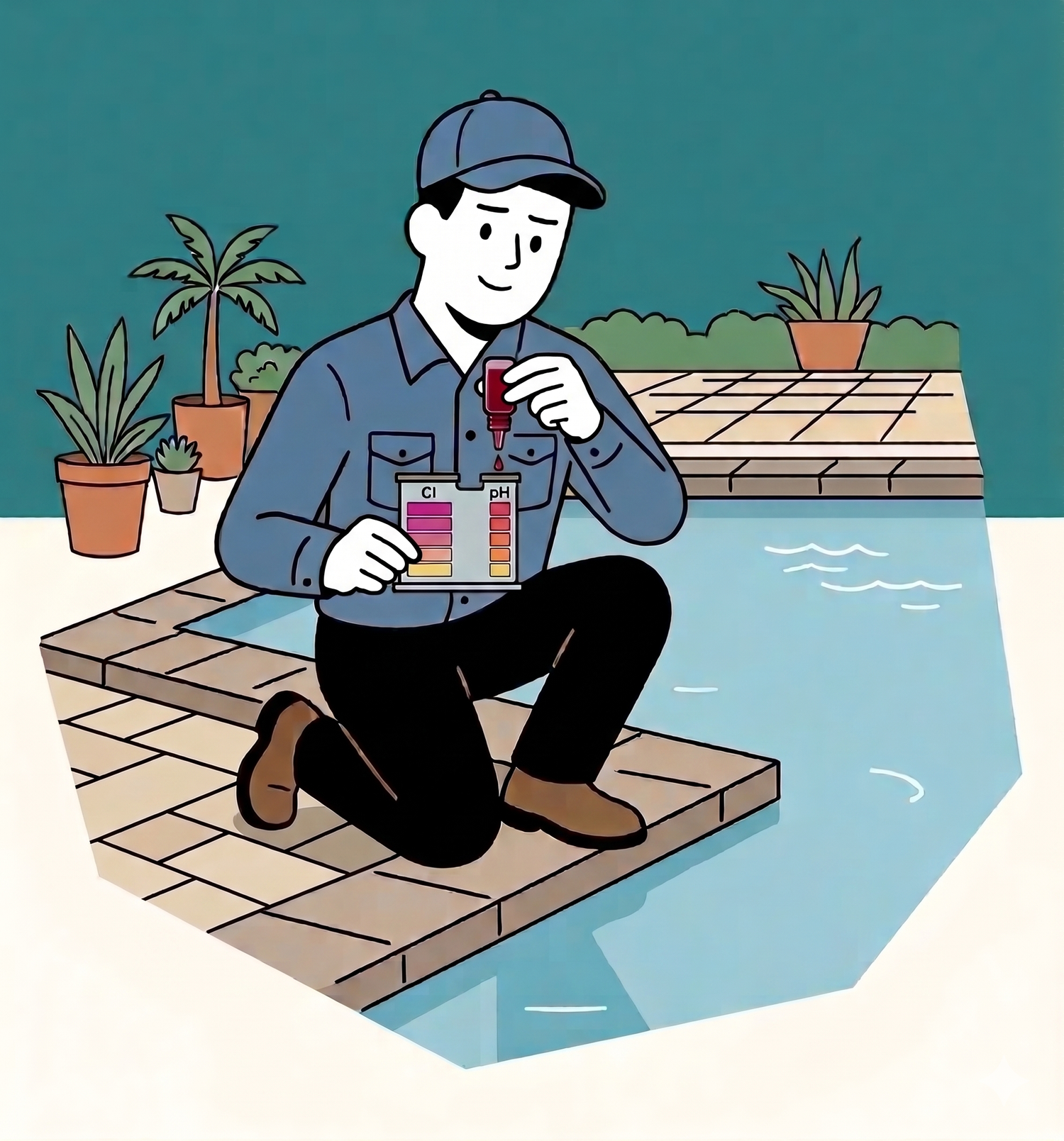
When testing pool water to prepare for an adjustment, Free Chlorine (FC) levels are essential to a CPO. Free Chlorine represents the active, uncombined sanitizer that is available to immediately kill pathogens and oxidize organic contaminants.
The PHTA recommended operational ranges for Free Chlorine are:
- Commercial Pools: 2.0 to 4.0 ppm (minimum allowable: 1.0 ppm)
- Commercial Spas: 3.0 to 5.0 ppm (minimum allowable: 2.0 ppm)
Operational Standard: Public health codes typically mandate the immediate closure of a commercial facility if free chlorine levels drop below the regulatory minimum or exceed 10.0 ppm.
(Check your local codes to ensure your pool's chlorine remains within legally required limits.)
2. Choosing Your Chlorine Adjustment Chemical
- Different chlorine compounds impact your overall water balance in unique ways. When adjusting your chlorine levels upward, you must account for how the selected chemical affects your pH and target ranges.
| Chlorine Type | Form | Avg. Available Chlorine % | Effect on pH | Best Used For |
|---|---|---|---|---|
| Sodium Hypochlorite | Liquid | 10% – 12.5% | High (9-14) | Daily automated dosing, rapid bulk adjustments |
| Calcium Hypochlorite | Granular / Tablet | 47% – 78% | High (8.5-11) | General manual dosing; raises Calcium Hardness |
| Dichlor-S-Triazinetrione | Granular | 56% – 63% | Near Neutral (6.5-6.8) | Spas and outdoor pools; quick-dissolving; raises Cyanuric Acid |
| Trichlor-S-Triazinetrione | Tablet / Puck | 90% | Very Low (2.8-3.5) | Outdoor floating feeders; raises Cyanuric Acid (Stabilizer) |
When selecting a chlorine source, smart operators use a chemical's secondary traits to solve other water balance issues simultaneously. For instance:
- To Raise Low Calcium Hardness: If your pool's calcium levels are trending too low, using Calcium Hypochlorite as your sanitizer will naturally introduce more calcium into the pool water with every dose.
- To Counteract Consistently High pH: If your pool water tends to ride high on the pH scale, Trichlor pucks have a very low pH (~2.8) which can help naturally stabilize your pH downward.
Critical CYA Warning: Always keep in mind that both Dichlor and Trichlor are stabilized chlorines. While they protect your sanitizer from sunlight, they continuously add Cyanuric Acid (CYA) to the water. Because CYA does not evaporate, it will build up in the pool over time, eventually requiring you to drain and refill water to prevent chlorine lock.
Struggling with 'chlorine lock' or rising stabilizer levels? Master commercial sanitizer dynamics in our next CPO Certification class.
Chlorine Dosing
| Chlorine Compound | Form | To Raise 1 ppm (per 10,000 gallons) | To Raise 10 ppm (per 10,000 gallons) | Secondary Chemical Impact |
|---|---|---|---|---|
| Sodium Hypochlorite (12.5%) | Liquid | 10.7 fl. oz. | 3.3 Quarts (107 oz.) | Raises pH significantly; adds salt byproduct. |
| Calcium Hypochlorite (67%) | Granular | 2.0 oz. (by wt.) | 1.3 lbs. (20 oz.) | Raises pH; adds Calcium Hardness over time. |
| Dichlor (56%) | Granular | 2.4 oz. (by wt.) | 1.5 lbs. (24 oz.) | Near neutral pH; continuously adds Cyanuric Acid (CYA). |
| Trichlor (90%) | Tablet | 1.5 oz. (by wt.) | 1.0 lb. (15 oz.) | Lowers pH aggressively; continuously adds Cyanuric Acid (CYA). |
The Standard Dosing Formula
To find your required chemical amount, use this plain-text formula:
Amount of Chemical = (Pool Volume ÷ 10,000) × Desired ppm Increase × Base Chemical Amount
Step-by-Step 30,000 Pool Gallon Example (Targeting a 3 ppm Increase)
Using Liquid Chlorine (12.5% Sodium Hypochlorite) as our example, our chart shows the baseline amount is 10.7 fl. oz. to raise 10,000 gallons by 1 ppm.
Here is how you calculate the dose step-by-step:
- Find the Volume Factor: Divide your pool volume by the baseline volume.
30,000 gallons ÷ 10,000 gallons = 3
- Multiply by the Target Increase: Multiply that factor by your desired ppm jump.
3 × 3 ppm = 9
- Calculate the Final Liquid Ounces: Multiply that result by the chemical's baseline ounce amount.
9 × 10.7 fl. oz. = 96.3 fl. oz.
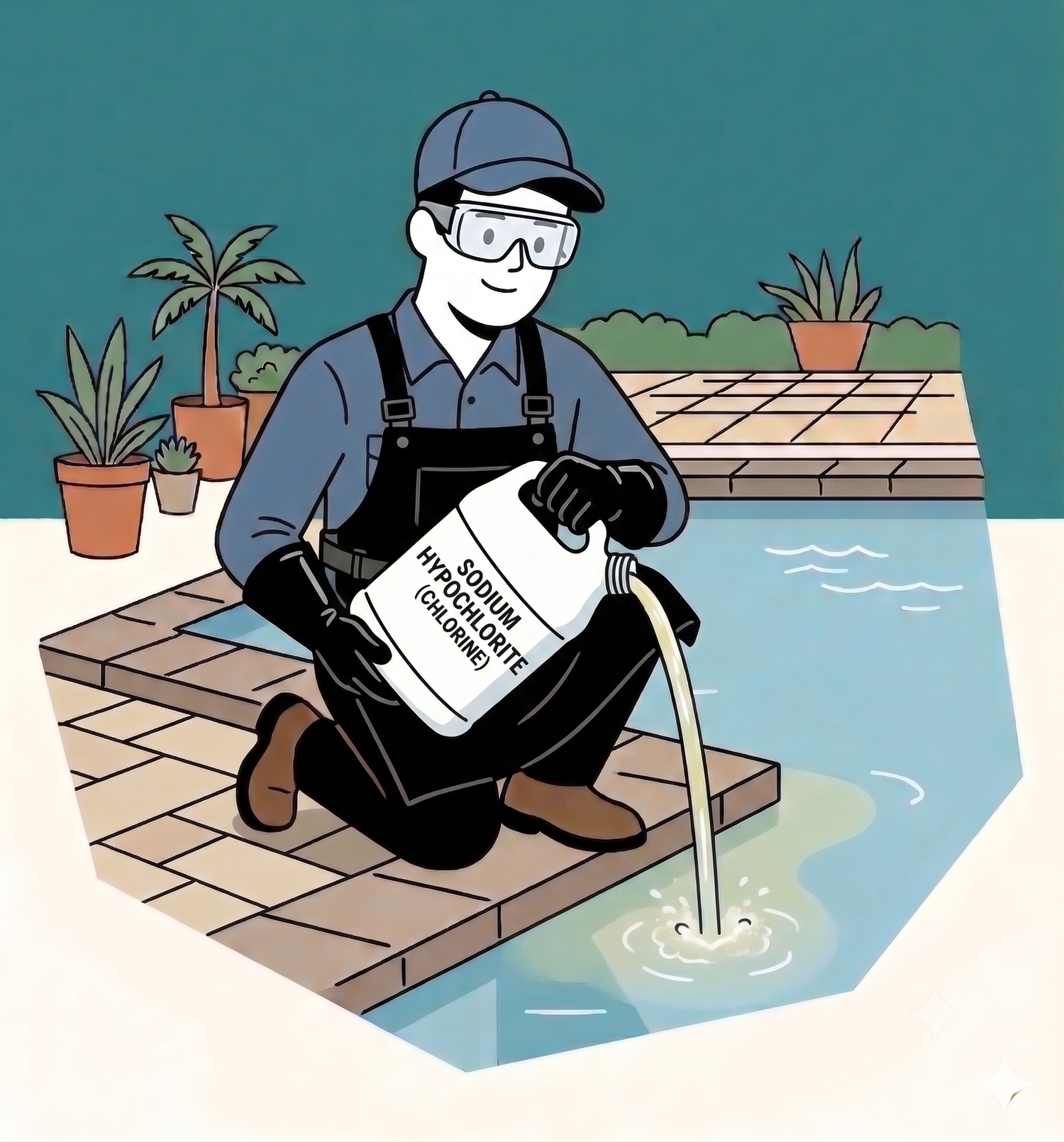
Conclusion: Measuring and broadcasting exactly 96.3 fluid ounces (Roughly 3/4 of a gallon) of liquid chlorine into your 30,000-gallon pool will perfectly achieve your targeted 3 ppm increase.
There is a science to elimination without chemical waste. Learn professional breakpoint chlorination formulas in our upcoming CPO course.
Important Safety Reminders:
- Read the SDS: Always consult the Safety Data Sheet (SDS) and manufacturer label instructions for every chemical before opening the container.
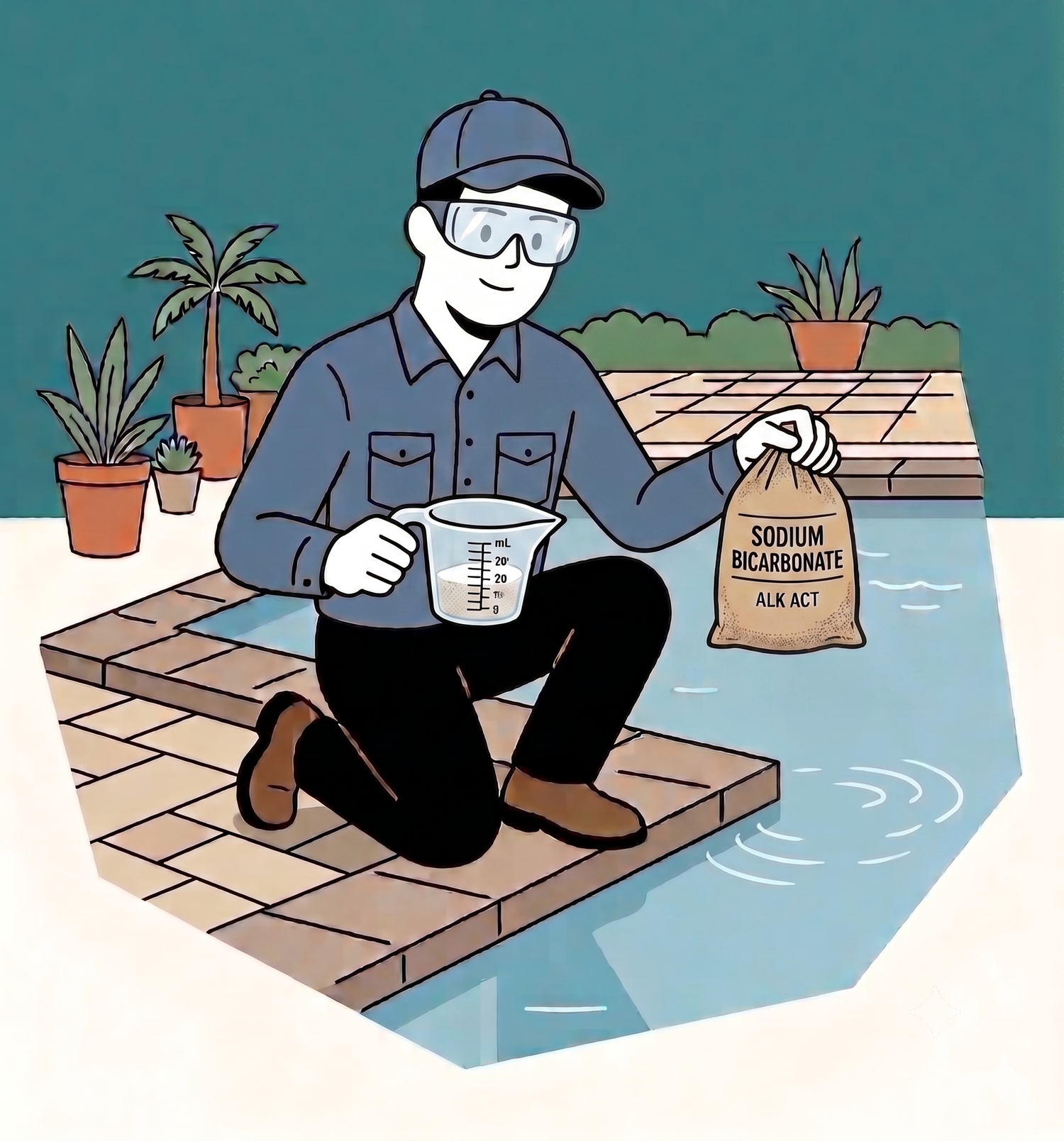
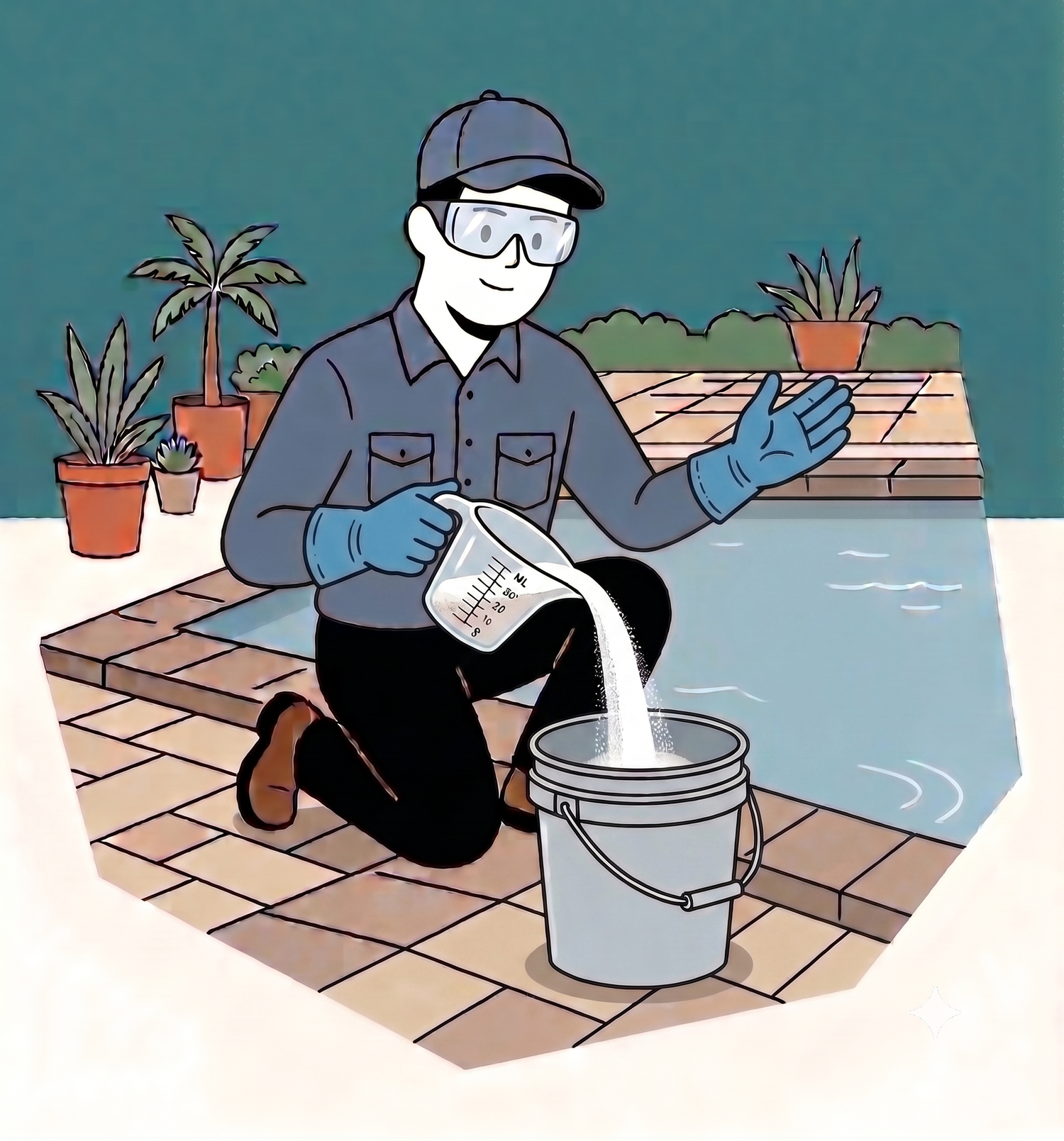
- Personal Protective Equipment (PPE): Always wear appropriate PPE, including chemical-resistant gloves, safety goggles, and respiratory protection where required.
- Never Mix Chemicals: Never mix different dry chemicals together, and never mix different types of chlorine (e.g., mixing Trichlor tablets with Cal-Hypo can cause a violent explosion).
- Always Add Chemical to water: When diluting chemicals, Always Add Acid (or chemical) to water—never add water to chemical.
- Local Regulations: Commercial pool operators must ensure all chemical adjustments comply with local, state, and federal health codes.