⚠️ Chemical Safety Notice & Disclaimer
For Informational Purposes Only. Pool chemical dosing carries inherent risks of severe injury, toxic gas release, and property damage. The calculations and instructions provided here are for general educational purposes and do not replace chemical labels, manufacturer instructions, or professional certified pool operator guidelines.
By utilizing this data, you assume all risk of liability. Always wear appropriate PPE and never mix chemicals. See Terms of Service.
How To Balance Pool pH
In commercial pool management, managing pH is one of the most critical component of water chemistry. Based on the standards set by the Pool & Hot Tub Alliance (PHTA) Certified Pool Operator (CPO) manual, pH controls not only swimmer comfort but also how effectively your chlorine kills pathogens and how well your pool infrastructure is protected from damage.
The Ideal Range
The PHTA defines the operational ranges for pool water as:
- Ideal Range: 7.4 to 7.6
- Acceptable Range: 7.2 to 7.8
(Check your local codes to ensure your pool's pH remains within legally required limits.)
This narrow ideal window is intentionally designed to match the natural pH of the human eye and tear duct (roughly 7.5), minimizing skin and eye irritation for swimmers.
The Consequences of Out-of-Range pH:
- Operating a facility outside of the PHTA guidelines causes rapid operational issues.
Low pH (Less than 7.2) — Acidic Water
- Infrastructure Damage: Acidic water aggressively dissolves copper from heat exchangers (staining walls green), etches plaster, and corrodes metal ladders or light fixtures.
- Swimmer Discomfort: Causes severe eye burn, skin itching, and degrades fabric in swimsuits.
- Chlorine Loss: While chlorine is highly active at low pH, it is also unstable and dissipates much faster under sunlight.
High pH (Greater than 7.8) — Alkaline Water
- Cloudy Water & Scale: Calcium dissolved in the water falls out of solution, leading to cloudy water and hard scale deposits on tiles, pipes, and salt cells.
- Filter Clogging: Scale builds up inside sand or diatomaceous earth (DE) filters, shortening filter cycles.
- Sanitizer Failure: Your chlorine becomes sluggish, increasing the risk of algae blooms and bacteria transmission.
Understanding pH is only half the battle—discover how it controls your entire sanitizer system in our comprehensive CPO Certification course.
Chemical Dosing
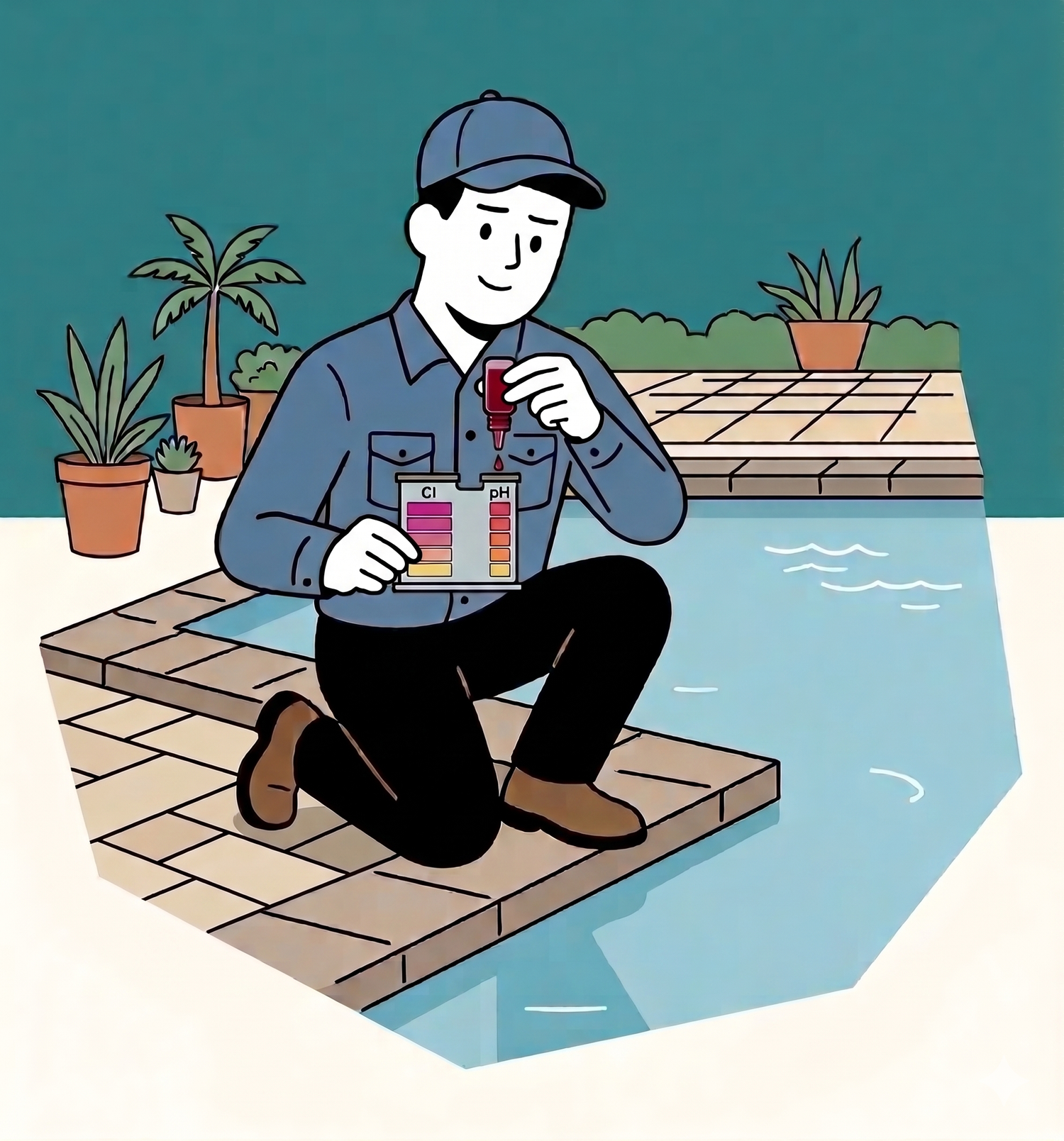
When a pool's pH falls outside the ideal 7.4 to 7.6 range, operators perform Acid Demand or Base Demand tests rather than relying on guesswork.
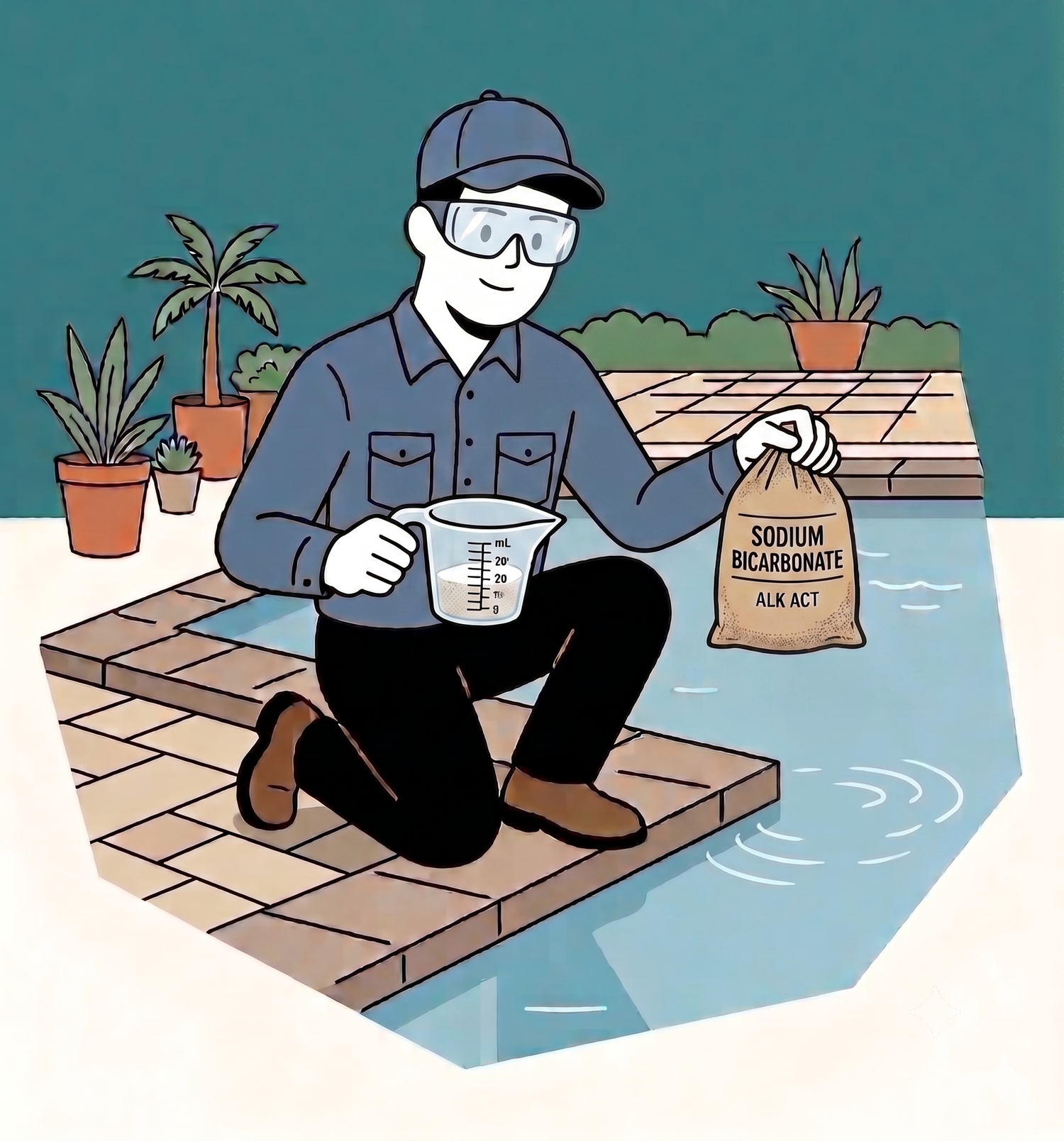
This testing involves taking the standard pH water sample and adding a specialized reagent drop by drop—counting each drop until the sample color matches the target pH indicator color. Each drop corresponds directly to a specific quantity of muriatic acid (to lower pH) or soda ash (to raise pH) required per 10,000 gallons of pool water, according to the manufacturer's reference charts.
This precise adjustment test prevents chemical "over-shooting," protects pool infrastructure from corrosive or scaling water, and ensures optimal sanitizer efficiency.
Stop guessing on chemical dosing. Learn the exact PHTA tracking formulas professionals use by enrolling in our next CPO course.
Important Safety Reminders:
- Read the SDS: Always consult the Safety Data Sheet (SDS) and manufacturer label instructions for every chemical before opening the container.
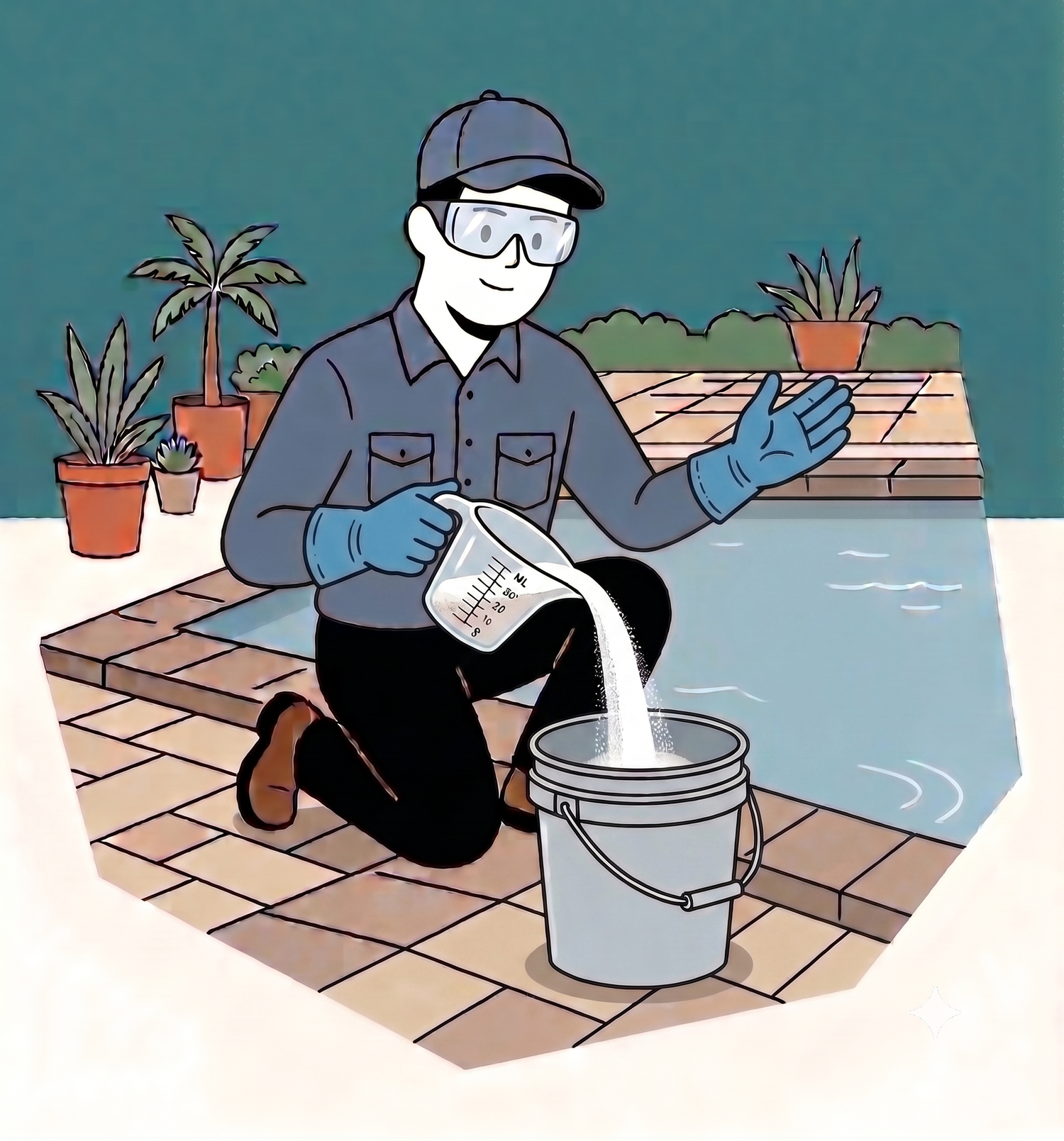
- Personal Protective Equipment (PPE): Always wear appropriate PPE, including chemical-resistant gloves, safety goggles, and respiratory protection where required.
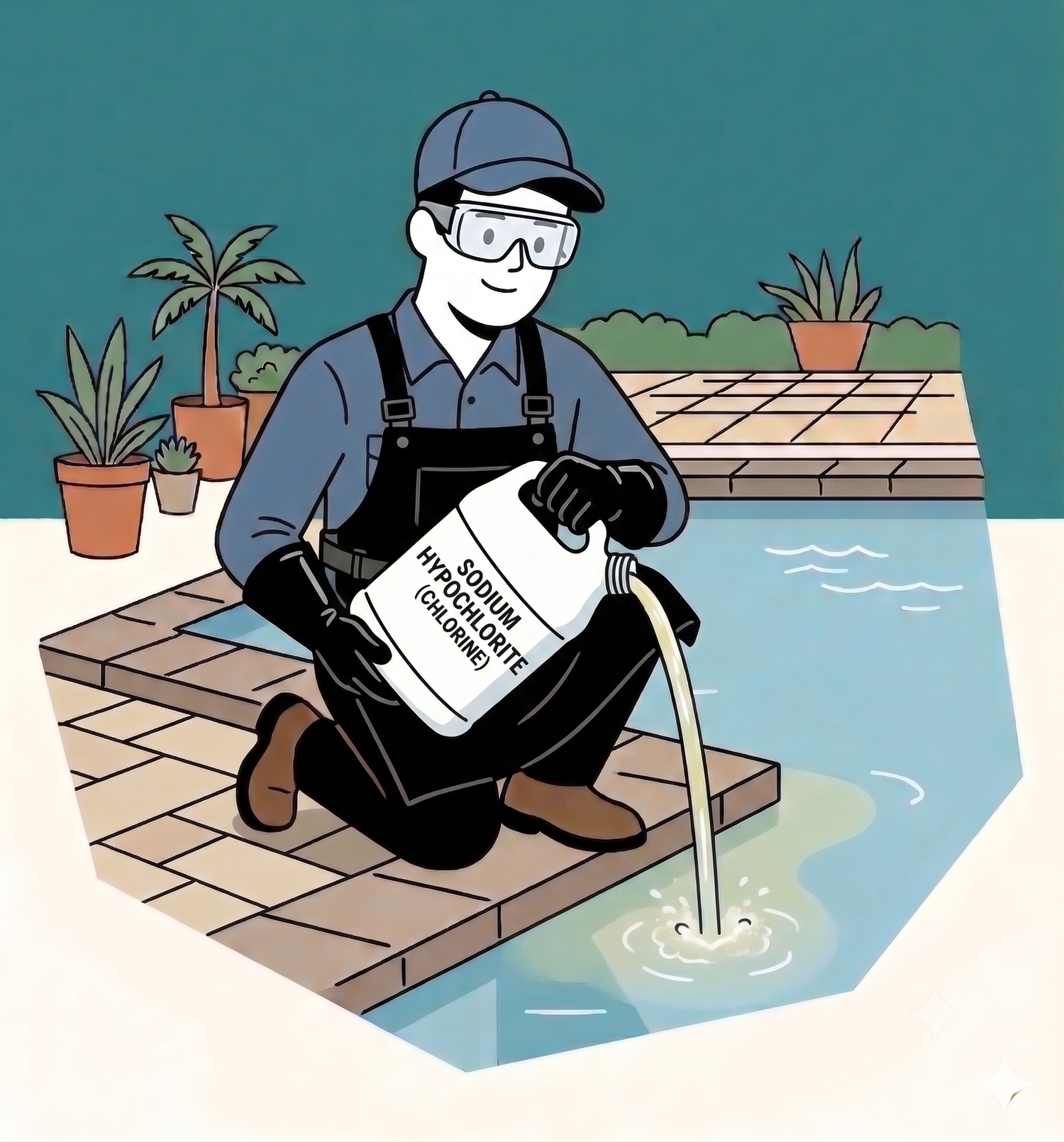
- Never Mix Chemicals: Never mix different dry chemicals together, and never mix different types of chlorine (e.g., mixing Trichlor tablets with Cal-Hypo can cause a violent explosion).
- Always Add Chemical to water: When diluting chemicals, Always Add Acid (or chemical) to water—never add water to chemical.
- Local Regulations: Commercial pool operators must ensure all chemical adjustments comply with local, state, and federal health codes.